
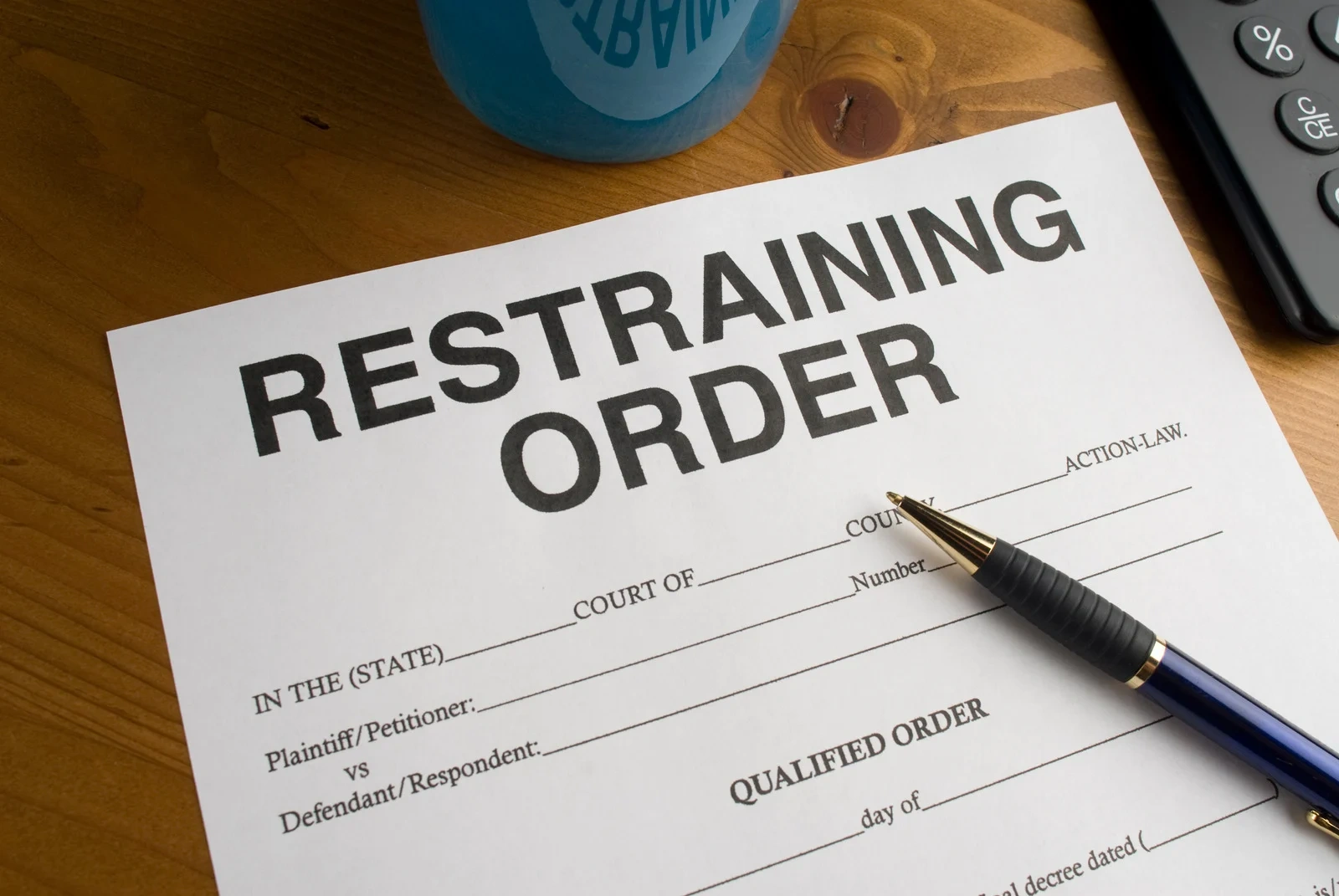
If you or a loved one is the victim of domestic abuse and wants to know how you can protect yourself, you might be asking the question, “What proof do you need for a restraining order in New Jersey?” Certain requirements must be met to get a restraining order in New Jersey, making it important to have an experienced restraining order lawyer in New Jersey to help.
What Is a Restraining Order?
A restraining order is a civil court order that prevents an abuser from contacting the victim. A restraining order requires the defendant to stay a certain distance away from the victim, and they may also be prohibited from entering the property where the plaintiff lives or works. In some cases, restraining orders can extend to cover dependents such as children. A temporary restraining order is a civil order, so it does not become a part of a person’s criminal record.
It is estimated that every year, 10 million people are affected by domestic violence. The State of New Jersey defines domestic violence as the occurrence of or a pattern of physical, verbal, emotional, or sexual abuse. It can include, but is not limited to, intimidation, isolation, threats, or financial control. It is estimated that 14.8% of women and 4% of men in the U.S. have been injured as a result of domestic violence.
There are two types of restraining orders:
- A temporary restraining order is easy to obtain, and often automatic. It lasts until the hearing for a final restraining order, which typically takes about 10 days.
- A final restraining order (FRO) is a long-term order to protect you. In New Jersey, it is permanent unless you request that the court vacate the order or the defendant files a motion with the Superior Court, Family Division to have the order lifted.
Proof Needed for a Restraining Order in New Jersey
To get a permanent restraining order, you must meet a certain standard of proof. The evidence must show that your claims of abuse are true by a preponderance of the evidence, which means that the claims are more likely to be true than not.
Obtaining a final restraining order requires evidence that proves domestic violence. A final restraining order hearing will take place, where the evidence will be presented to a judge. In order to be issued an FRO, the evidence needs to show two elements:
- A predicate act of domestic violence
- A final restraining order is necessary to keep you safe
You must provide enough evidence to prove these two elements. You can do this by providing direct or circumstantial evidence.
Direct evidence can include:
- Physical evidence of an incident
- Text messages that demonstrate threats
- Witness testimony of the abuse
- Surveillance video showing the abuse
- Recorded phone calls
Circumstantial evidence is not always as clear as direct evidence, but it can show a pattern of abuse. For example, a history of domestic abuse could show that the abusive party may be more likely to engage in domestic violence again in the future. Circumstantial evidence can include a pattern of harassing behaviors, such as overly frequent texts or phone calls, or a history of past abuse that could indicate the likelihood of current or future abuse.
Hire a Domestic Violence Lawyer in New Jersey
There are many reasons why you should hire a domestic violence lawyer when you need a restraining order. The legal team at The Montanari Law Group has the experience needed to help you prove your claim. New Jersey domestic violence laws are complex, and domestic violence cases can be emotionally overwhelming. You shouldn’t have to face a restraining order hearing on your own.
Hearings have strict rules for evidence, and we understand the specific protocols for presenting documentation to the court. Having the correct information ensures mistakes are not made when trying to secure a final restraining order.
Our experienced legal team can help you gather the evidence you need and build a strong case to protect you and your dependents from an abusive partner.
FAQs
What Are the Requirements for a Restraining Order in New Jersey?
The requirements for a temporary restraining order in New Jersey include showing a reasonable fear for your life or health, proof of a relationship with the abuser, and evidence that the abuser committed one of the predicated acts listed in N.J.S.A. 2C:25-19. These acts include assault, kidnapping, sexual assault, harassment, and stalking. Our domestic violence lawyer in Passaic County can help you prove that an act of domestic violence occurred.
What Evidence Do You Need to Prove Harassment in New Jersey?
To prove harassment in New Jersey, you need to show a pattern of threats and unwanted contact. You can do this by saving emails, texts, or voicemails. Social media posts can also prove harassment, as well as pictures, videos, and statements from witnesses. Evidence should include a timeline of incidents and clear documentation of specific incidents. Reach out to a New Jersey harassment lawyer for help.
What Qualifies as Harassment in New Jersey?
Actions that qualify as harassment in New Jersey include using offensive coarse language when communicating with another person, attempting to communicate at odd hours, or unwanted offensive touching. Threatening harm or repeated alarming behavior, such as committing acts with the purpose of alarming or annoying, also qualifies as harassment, both in person and online.
Who Can Get a Restraining Order in New Jersey?
In New Jersey, you can get a restraining order if you are at least 18 years old or an emancipated minor, in the military, have a child, or are pregnant and are a victim of domestic violence by your spouse, a former spouse, or a person who is or was a member of your household. You can also get a restraining order regardless of your age if you have a child or are expecting a child with someone.
Contact a Domestic Violence Attorney in New Jersey
If you want to know more about what proof you need to get a restraining order, contact us at The Montanari Law Group. Our attorneys have over 30 years of experience in domestic violence cases and can help you through the process.